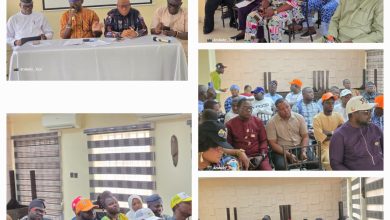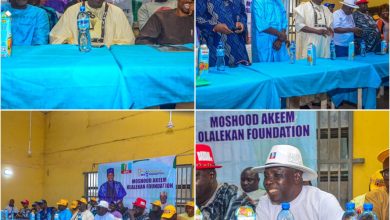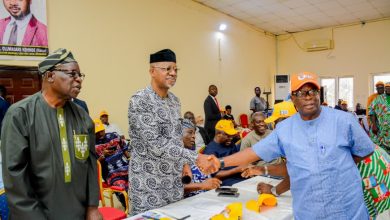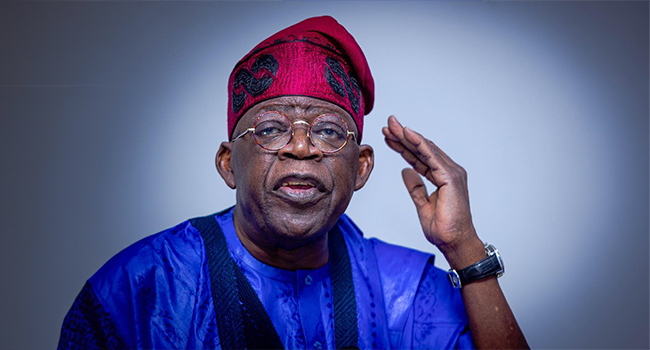
The Northern political leaders, academics, youth groups, traditional rulers and civil society stakeholders on Saturday pledged their support for President Bola Ahmed Tinubu’s administration, warning that any reversal of the ongoing economic reforms could endanger Nigeria’s recovery and long-term stability ahead of the 2027 general elections.
The position was reached at a Northern Stakeholders Townhall Engagement organised by the PBAT Door-to-Door Movement at Arewa House, Kaduna, where participants undertook a critical appraisal of the Tinubu administration and examined the implications of the emerging 2027 political discourse.

The gathering concluded that despite current economic hardship, the reforms being implemented by the Federal Government require continuity, patience and stronger public communication to deliver lasting benefits.

Representing President Tinubu at the occasion , the Special Adviser on Media and Public Communication, Sunday Dare, said the administration had moved Nigeria “from reforms to recovery” through bold decisions aimed at correcting long-standing structural distortions.

He listed key policy interventions to include fuel subsidy removal, foreign exchange reforms, improved revenue generation, stronger fiscal discipline and renewed investor confidence.

According to him, the difficult decisions were necessary to prevent deeper economic decline and reposition the country for sustainable growth.

Dare also highlighted federal social programmes such as the NELFUND student loan initiative, healthcare reforms, pension restructuring, salary adjustments and youth empowerment schemes, saying the government was balancing economic reforms with social protection measures.
On infrastructure, he said major projects such as the Lagos-Calabar Coastal Highway, Sokoto-Badagry Superhighway, Abuja-Kaduna-Kano Expressway and rail modernisation reflected a national development agenda rather than sectional interests.
Kaduna State Commissioner for Information, Ahmed Maiyaki, said increased federal allocations had enabled Governor Uba Sani’s administration to expand transport, education, healthcare and agricultural interventions across the state.
He disclosed that Kaduna had deployed over 100 CNG buses for free transportation services, rehabilitated health facilities, constructed roads across the 23 local government areas and improved ease of doing business.
Maiyaki also attributed improved security in Kaduna to deliberate governance strategies, peacebuilding initiatives and stronger engagement with communities.
In his welcome remarks, National Coordinator of PBAT Door-to-Door Movement, Sunday Adekanbi, described the townhall as a strategic platform for assessing governance outcomes and mobilising support for continuity of reforms beyond 2027.
He warned that policy discontinuity could reverse gains already recorded in security, infrastructure and economic management.
Delivering a keynote paper, Prof. Solomon T. Gushibet said Tinubu’s reforms were painful but necessary interventions designed to avert fiscal collapse and restore confidence in governance institutions.
He identified achievements in local government autonomy, CreditCorp, CNG initiatives, agricultural reforms, technical education and health sector development, while acknowledging challenges such as inflation, food insecurity, debt pressure and communication gaps.
According to him, continuity in 2027 would be critical to consolidate gains already made.
During panel discussions, stakeholders unanimously stressed that Nigeria was undergoing structural adjustment that required delayed gratification rather than abrupt policy reversal.
The Guardian