Femi Ogbonnikan
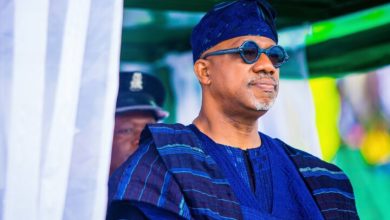
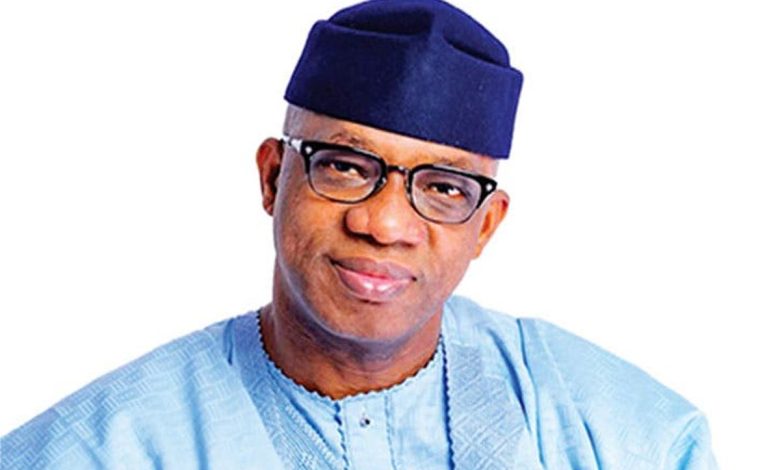
The way Otunba Gbenga Daniel (OGD) is seeking a return to the Senate to represent Ogun East is the definition of a bull in a china shop. His recent conduct threatens the peace and stability of the All Progressives Congress (APC) in Ogun State. Refusing to accept the party stakeholders’ collective resolution, he is spoiling for a showdown with Governor Dapo Abiodun-the people’s choice as consensus candidate for the senatorial seat.

This is a necessary shake-up of the status quo. In governance, trust is everything. It is the social capital that sustains the relationship between government and citizenry. Trust is earned, not commanded. As an elected representative, once you lose trust, you lose everything: votes, public support, and party patronage.
OGD earned public rejection through years of misgovernance as governor and misrepresentation as senator. Yet his handlers frame this inevitable shift as a coup d’état. It is not. It is consequence.

No individual’s ambition outweighs the party’s interest or the electorate’s will. As you cannot force a wife on an unwilling husband, the party cannot force an unpopular candidate on the populace — not as a consensus pick, not through direct election.

Performance ends the debate. Abiodun, the incumbent governor, has delivered. His best is still coming. OGD is spent. He gave all he had as governor, and again as senator. Ogun East APC stakeholders are done debating. Their vote of confidence is unequivocal: Abiodun carries the state’s banner to the Senate, not OGD.

Regrettably, with no regard for party discipline, all hell has been let loose. The media is now awash with innuendos, brickbats, threats, and direct attacks on Governor Abiodun. This exposes the classic struggle against party supremacy and open defiance of a consensus arrangement. For this election cycle, the consensus option is a strategic move to ensure stability. In a state as politically complex as Ogun, with its deep commercial rivalries and Senatorial tripod, an open primary can quickly become an expensive war of attrition. When a high-profile figure like the former governor challenges that collective resolution, it creates ripples that disrupt internal harmony. This is where the “bull” metaphor fits-a refusal to adhere to established hierarchy. Whether seen as principled defiance by his supporters or needless disruption by party members, it creates a high-stakes environment that benefits no one except the opposition.

Needless friction between top leaders trickles down to grassroots supporters and risks splitting votes in the general elections. It fractures ward meetings, poisons WhatsApp groups, and turns loyal canvassers into rival camps. Such infighting also distracts from the administration’s policy goals and legislative focus. Every hour spent managing ego is an hour stolen from governance.
Disrupting the party arrangement serves nobody’s interest. A media war cannot undo what the people have decided. In a democracy, the only power the electorate holds as sovereign is the right to choose their representatives. OGD is aggrieved, not because the consensus is unpopular, but because it is Abiodun. That is personal, not political.
Abiodun is not the problem, but Daniel’s antecedents are. People don’t suddenly turn their backs on leaders. They do so after a long audit of broken promises, abandoned projects, and vanished goodwill. They do so in the face of comprehensive failure. Abiodun’s emergence as the people’s choice within the party framework is a referendum on his administration’s performance. It is a bold statement of acceptance for his purposeful leadership. Across all indices of development-roads, revenue, health, education-he has earned the ticket to continue his transformative agenda.
For the incumbent senator, this war of words is a battle for relevance and a test of his political legacy in Ogun East. Every legacy politician faces this moment: the point where yesterday’s clout meets today’s scorecard. Competition is expected in a democracy. But the line between healthy competition and spoiling for war depends on whether actors prioritise the party’s long-term health over individual ambition. One builds the house, the other burns it to prove a point.
The people’s support for Abiodun as consensus candidate confirms it: party structures and stakeholder groups have reached a synergy that prioritises continuity over competition. In Nigerian politics, a consensus move of this magnitude is rarely just procedure; it is a public referendum on the incumbent’s scorecard. It is the elite saying, “We can read data. We’ve seen the books. We’re not gambling.”
By bypassing a fractious primary, the leadership makes a calculated statement. The administration’s trajectory is strong enough to withstand scrutiny and stable enough to avoid a litmus-test primary that would bleed resources and open old wounds. The focus on key pillars-the Gateway International Airport, aggressive road infrastructure, and deep civil service reforms-has done more than deliver projects. It has consolidated cross-district support in a state where senatorial fault lines often dictate outcomes. Ijebu, Remo, egba and Yewa can all point to something.
Adopting Abiodun signals an institutional desire to protect long-term projects from political whiplash. Mega-projects don’t survive four-year attention spans. They need ten. It ensures developmental blueprints in motion are not abandoned by a change in leadership style, temperament, or priority. It shifts the campaign from who should run to what has been delivered and what is next. That is how serious states behave.
The completion and operationalization of hubs like the Gateway International Airport are tangible evidence of governance that transcends campaign posters. These are not 3D renders or foundation stones. These are not promises. They are assets on the state’s balance sheet-revenue centres that will outlive this news cycle.
More telling are the fiscal undercurrents. Sustained efforts to expand IGR and manage the debt-to-revenue ratio are the real metrics the political elite study before blessing a consensus. Optics win elections. Balance sheets win endorsements from people who actually fund campaigns. They’ve seen the cash flow.
Which is why it is startling to see commentators without basic economics make confident, uninformed pronouncements about public financing. Most striking is a recent article by Victor Ojelabi comparing the current administration’s debt profile to OGD’s era. Among other claims, he questioned Abiodun’s eligibility for Ogun East Senate, citing N494 billion in debt. The premise betrays ignorance of how modern economies function. It also betrays intent. Debt itself is not a moral category. What the borrowed money funds is. In macroeconomics, debt is a tool, not a character flaw. Every developed nation, every growing state, leverages. The sin is not borrowing.
The sin is borrowing to consume. Comparing a state budget to a household budget is one of the most durable fallacies in political discourse. Debt volume alone is theatrical. It tells you nothing about capacity, productivity, or return. A man borrowing for a luxury car is taking on a liability that depreciates the moment he leaves the lot. A government borrowing to build a cargo airport or deep-sea port is underwriting future dividends that compound for decades. If a government borrows billions to pay salaries, it is digging a consumption hole that voters will fill next month with new demands. If it borrows to build the Gateway Airport or the Ijebu-Ode/Epe Expressway, it engineers multiplier effects. Construction employs artisans, engineers, and suppliers today. Better roads cut logistics costs for manufacturers tomorrow. Modern infrastructure attracts industry, which widens the tax base to service the debt the day after. That is basic development finance, not rocket science.
Focusing on N494 billion without referencing Gross State Product is deliberate misdirection. It is like calling a man with a N10 million loan bankrupt while ignoring the N500 million factory he owns that services the loan and pays his staff.
Ogun currently posts the second-highest IGR in Nigeria, behind only Lagos. That did not happen by accident. As long as the Debt Service Coverage Ratio remains healthy, the state is solvent by global standards. Liquidity, not headline debt, is the test of fiscal health. Can you pay? Yes. Then keep building.
Second, in a modern economy, debt is often repaid in cheaper future currency. If a state borrows today at a fixed rate and inflation stays structurally high, the real value of that debt shrinks. You pay back with money that buys less cement, less steel, less labor. That is not an excuse for reckless borrowing. It is a reminder that nominal figures without context are propaganda, not analysis.
Ojelabi, while public concern about debt is legitimate, your analysis should demand transparency, not traffic in alarm. The electorate deserves to see the direct link between that N494 billion and tangible, revenue-generating assets. If the math of borrowing does not add up to future growth, the ignorance isn’t in the debt itself, but in its deployment.
This is the distinction of productive debt. If citizens can point to a road, a hospital, a classroom, or an airport and say, “That is where the money went,” the political question mark becomes a footnote. If they can’t, the number doesn’t matter-N50 billion or N500 billion, it’s waste.
In Ogun’s case, fiscal data from 2019 to 2026 shows debt as a byproduct of aggressive expansion, not systemic waste. You don’t 5x IGR by accident. You don’t attract Gateway Airport by luck. While N494 billion is a loud number, context disarms it. The Ogun economy grew from N3.5 trillion in 2019 to a projected N18.96 trillion in 2026. Debt is sustainable when it’s a declining percentage of a larger pie. You judge leverage against the size of the enterprise, not in isolation. Apple borrows. Dangote borrows. Serious people borrow to build.
Income tells the same story. IGR jumped from roughly N50 billion in 2020 to over N240 billion in 2025, with a N512 billion target for 2026. That is a five-fold increase in five years. No serious analyst ignores that curve when discussing debt. That curve is why the consensus happened.
A significant portion of the N494 billion is paper debt — an accounting consequence of naira devaluation, not new spending. A $100 million foreign loan in 2019 was booked at N33 billion. Today that same loan is carried at nearly N150 billion without borrowing an extra dollar. To campaign on that differential as “new debt” is dishonest or illiterate. Pick one.
Ojelabi, if you want visible justification, the receipts are in concrete, steel, and asphalt: Gateway International Airport, industrial arteries, the Yellow Roof Revolution, and the Blue Marine Economic Zone.
The Gateway International Airport is not just a runway. It is an aerotropolis designed to anchor a Special Agro-Processing Zone, positioning Ogun as West Africa’s logistics hub for perishables, textiles, and light manufacturing. That is future IGR from cargo, customs, and commercial leases.
The renovation of over 1,000 classroom blocks across all 236 wards and the upgrade of primary healthcare centers are not vanity projects. They are social infrastructure. Healthy, educated citizens are economic assets who pay tax and don’t drain the system. That is human capital ROI.
The reconstruction of the 42km Sagamu/Interchange/Abeokuta Road and the dualization of the Ijebu-Ode/Epe Expressway have streamlined movement between Agbara/Ota clusters, Lagos, and Lekki. A truck that spent 6 hours now spends 2. Roads that cut travel time are fiscal policy. They are private-sector subsidies paid once, yielding forever. The Olokola Deep Sea Port framework aims to create a maritime gateway that could rival Lagos ports and decongest the national supply chain. That is long-term revenue from tariffs, concessions, and jobs. That is a 50-year bet.
Overall, the argument that debt equals ineligibility ignores a fact: stagnation costs more than borrowing. By borrowing to build today, the administration locks in infrastructure at today’s prices before inflation drives costs higher. A kilometre of road not built in 2022 costs 40% more in 2026. Inaction is the most expensive policy. Ask any engineer.
As the state approaches a trillion-naira budget cycle, the question has shifted from how much did you borrow to how much did you grow? The outrage over N494 billion is the easiest big number for a campaign flyer. It requires no nuance, no context, and no alternative. It is lazy politics.
It is a device to trigger debt anxiety without offering a better fiscal model. By framing debt as an eligibility question, OGD’s handlers try to turn a balance sheet item into a moral failing. That soundbite works in a vacuum. It collapses on contact with reality, and reality in Ogun East has a runway.
It is an emotional hook that bypasses infrastructure logic. The moment a voter drives on a new Sagamu/Abeokuta road or sees cargo planes at Gateway Airport, the debt argument loses its sting. Propaganda dies where evidence lives. Evidence in Ogun has a postcode.
When people can touch the receipts in asphalt and concrete, the big number on the opponent’s flyer starts to look like a fair price for progress. Because it is.
Finally, there is no constitutional or legal provision in Nigeria that bars a candidate from office based on debt incurred during their administration. None. Linking debt to eligibility is a rhetorical stretch to manufacture doubt, not a serious legal challenge. It is politics, not law. And the electorate, after eight years of watching concrete dry, is smarter than that.
Ogbonnikan is a Senior Special Assistant (SSA) to the Ogun State Governor on Media.