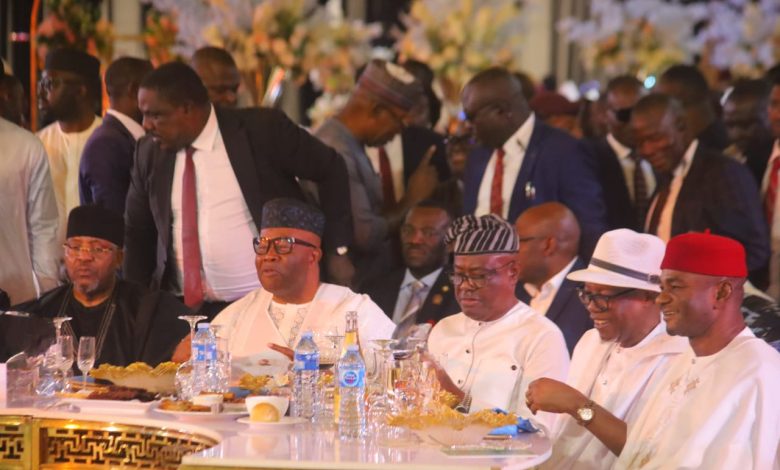
President Bola Tinubu says the Federal Capital Territory (FCT), Abuja, is changing for the better under the leadership of Nyesom Wike as its minister, 50 years after creation.
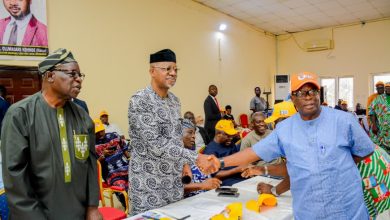
Tinubu said this in Abuja on Friday night, during a special thanksgiving dinner to celebrate the successful inauguration of 31 projects across the FCT in 28 days.

Represented by the Senate President, Sen. Godswill Akpabio, the president commended Wike and his team for all the sacrifices to ensure that the nation’s capital works for everyone.

He further commended the minister for demonstrating that “leadership is not measured by how loudly one announces plans, but how clearly the people can see the results of the plans”.

He said that the FCT belonged to every Nigerian, describing it as a city where unity resides, where diversity meets, and where the hope of every citizen finds a common address.

“Every new road run here shortens somebody’s journey, every new bridge connects more than communities; it connects friendship, it connects love, it connects unity, and also connects opportunities for Nigerians.

“Every completed project quietly tells Nigerians that the government can still work when vision meets determination,” he said.
Mr Aliyu Modibbo, a former minister of the FCT and current Special Adviser to the President on General Duties, Office of the Vice President, said that Wike was among the ministers of the territory that had performed well.
Modibbo, who represented Vice President Kashim Shettima at the event, expressed optimism that Wike would return as FCT minister in Tinubu’s second tenure saying, “four years is not enough to complete what you have started”.
In his remarks, Wike said that when he assumed office as FCT minister in August 2023, he met depressed civil servants with no motivation to drive Tinubu’s Renewed Hope Agenda.
He said that he and the FCT Minister of State, Dr Mariya Mahmoud turned things around,by ensuring the establishment of the FCT Civil Service Commission.
According to hom, the commission allows civil servants to rise to the position of a Permanent Secretaries and Head of Civil Service.
He said that Tinubu gave the approval to motivate the workers so that they could give in their best for the development of the FCT.
The minister said that with the motivated workers, nine projects were inaugurated in the first year of Tinubu in office, 19 projects in the second year and 31 projects in the third year.
He said that the removal of FCT from the Treasury Single Account also contributed to the feat, by enabling the administration to access funds from commercial banks to execute projects.
He commended the contractors for quality and timely delivery of projects across the territory and promised to continue to work with them to give residents the best.
“Comparatively, what Tinubu has done and will continue to do in the FCT is unprecedented. Most of the projects we completed were not initiated by the current administration and 70 per cent of them were abandoned projects.
“The only project that was not completed is the Inner Southern Expressway (ISEX),” Wike said.
Also, Speaker of the House of Representative, Tajudeen Abbas, described Wike as the “best performing minister of the FCT so far”, and commended the minister for the drive to change the landscape of the FCT.