
Femi Ogbonnikan
Ogun State has become a volatile political theatre, characterised by sly innuendoes, raw attacks and unverified allegations of wrongdoing against the current administration of Governor Dapo Abiodun. It is a clime where partisan-friction often outweighs policy. Here, bad politics doesn’t just exist-it runs deep.

This culture of perpetual friction does more than just clutter the headlines; it creates a fog that obscures genuine governance. When every policy is met with a reflex of cynicism and every achievement is dismissed as a calculated ploy, the casualty isn’t just the reputation of the administration—it is the progress of the state itself. In our current environment, the line between constructive opposition and systematic sabotage has become dangerously thin.
However, the wind has blown; we’ve seen the hen’s romp. Desperate state actors are orchestrating social discontent, using Governor Abiodun as a scapegoat to score cheap political points. They spin narratives, prioritizing sensation over substance, creating deafening noise. Behind each calumny campaign and midnight press release lies a calculated attempt to destabilize the status quo, fueling politics with grievance rather than growth. The secret motives of the opposition are now in public knowledge: discredit the administration’s good work.

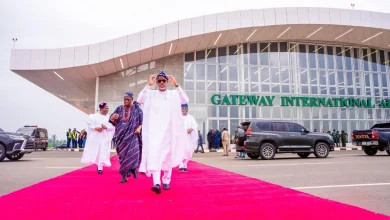
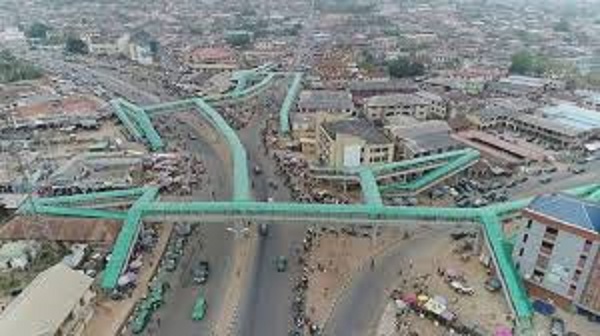
While these merchants of discord focus on optics, the reality of governance in Ogun State is written in asphalt, concrete, and socio-economic indices. The evidence is irrefutable: over 1,600 kilometres of roads have been reclaimed from years of neglect, and the Gateway International Airport—once a mere blueprint—is now a bustling reality set to welcome cargo flights from Europe. From the record-breaking N250 billion internally generated revenue in 2025 to the 20,000-hectare rice farmland in Yewa, the Abiodun’s administration is speaking the language of development. These are not innuendos; they are milestones that directly improve the livelihoods of the people, proving that while the wind of politics may blow, the foundation of progress remains unshaken.
Sadly, despite its good work, some cynics masquerading as advocates of public good framed the administration’s achievements as a failure of governance. In one instance, a particular critic blamed the collapsing road infrastructure in neglected communities on the failure of the administration. The writer went further to attribute a particular quote to the governor, stating: “We cannot reconstruct all the bad roads in three years. In fact, no administration can reconstruct all the roads in Ogun State, not even in eight years.”

In spite of this transparent honesty, some mischief-makers turned it against the administration. Truly, no administration can fix everything at once; to suggest otherwise is not only hypocrisy but the height of deception. These roads did not suddenly collapse; they are the casualties of systematic maintenance failure and prolonged years of neglect. The residents of the affected communities know their history; they possess the documented evidence of the attention—or lack thereof—they suffered under successive administrations. You cannot divorce the past from the present; both co-exist as a single phenomenon. Therefore, blaming current road dilapidation solely on the present administration is as illogical as a man waking up with total amnesia, oblivious to the journey that brought him here.

Development is not an ad hoc event; it is a continuous work in progress. No single superman can fix a state’s entire infrastructure in one stroke. If each administration focuses on building upon the foundations of the last, the state will inevitably prosper. While criticism is a vital pillar of democracy when based on verifiable facts, the cynics fueling the social media hashtag #DapoFixOgunRoads appear more interested in political character assassination than genuine progress. This approach, fueled by partisan bad blood, ignores the documented reality of the task at hand. True patriotism demands that we move beyond performative hashtags and engage in the more difficult, but necessary, work of objective analysis and collaborative growth.
To put it mildly, the cynics’ motives, driven by political bad blood, negate the essentials of good governance and ignore the historical context of the problem. This is not patriotism; it is sensationalism dressed in a toga of public probity. Beneath the facade lies a calculated political amnesia—a desperate attempt to stall Governor Abiodun’s momentum and block his logical next level step toward the Senate.
Ultimately, the citizens of Ogun State stand at a crossroads between the noise of grievance and the rhythm of growth. We must decide if we will be distracted by the choreographed shadows of bad politics or if we will cast our lot with the visible light of development. The Gateway International Airport, the thousands of kilometres of newly paved roads, and a soaring economy are not mere political talking points; they are the inherited assets of our children. As the wind continues to blow, let it only reveal the strength of our collective resolve to protect this progress. In the end, the most powerful rebuttal to any calumny campaign is not a press release—it is the enduring prosperity of a state that refuses to be held back.
It is important to note that delivery of good governance does not end in serving in an executive capacity. Effective representation at the national level is equally crucial for the state’s overall development effort. So, rather than framing Abiodun’s bid for the Senate as his next political step, it should be seen as continuation of his vision for Ogun’s socio-economic and industrial transformation. Executive action builds the foundation, but Legislative influence secures the resources. This justifies why Governor Abiodun would move up to the Senate to continue the work he started.
Argument for developmental synergy is particularly more apt here. By moving from the Executive seat to the Senate, Abiodun transforms from the person requesting federal aid to the person authorizing it. To understand why Senatorial representation is the next level of Governor Abiodun’s industrial vision, one must look at the mechanics of project allocation. While the Executive branch in Abeokuta manages the state’s internal revenue, the real scale of socio-economic transformation often depends on the federal budget. An effective representative at the national level facilitates development through three primary channels: Budgetary Inclusion, committee oversight and policy alignment. Leveraging budgetary inclusion, Abiodun will ensure that Ogun’s critical infrastructure—especially federal trunk roads—is not just a footnote, but a priority in the National Appropriation Bill. A Senator does not just ask for projects; he sits in the rooms where the National Appropriation Bill is crafted. By serving on key committees—such as Works, Finance, or Industrialization—a representative ensures that Ogun’s critical infrastructure is a primary line item, not an afterthought.
In exercise of oversight, having him in influential committees like Works, Finance, or Power, he can compel federal agencies such as FERMA to fulfill their obligations to the state.
A strong Senator uses the oversight powers to ensure these agencies prioritize the neglected communities within their home state, effectively bringing federal resources to bear where state budgets may face constraints.
As a Governor, who has already run the state, Prince Abiodun knows exactly which federal laws need to be amended to unlock Ogun’s full economic potential. His experience will serve as a guide for policy alignment and national legislation on Free Trade Zones, inland ports, and railway expansion. This is the engine room of industrialization.
Transforming Ogun into a global socio-economic powerhouse requires more than just local laws. It requires national legislation on Free Trade Zones, port concessions, and railway integration. A leader who has governed the state knows exactly which federal red tape needs to be cut to unlock the state’s full potential.
For a state like Ogun, which serves as Nigeria’s industrial hub, this synergy is not just beneficial—it is a mechanical necessity.
In this light, Abiodun’s Senate seat is not a retirement home; it is a strategic command post. It will allow him to secure the National Cake and bring it home to complete the projects that a limited state budget cannot handle alone. Like a relay race, the Governor lays the track, but the Senator clears the hurdles at the federal level to ensure the finish line is reached.
Rather than viewing a bid for the Senate as a personal next step, it should be recognised as a strategic expansion of a proven vision. It is the transition from implementing development at the state level to authorizing and securing it at the federal level. In the relay race of governance, the Governor lays the track, but the Senator clears the hurdles in Abuja to ensure the state reaches the finish line of total industrial transformation.
The path to a transformed Ogun State is not paved with reactionary hashtags or political bad blood; it is built through the steady, interlocking efforts of executive action and strategic national representation. While it is easy to frame a leader’s transition as mere ambition, the reality is far more consequential. Secured federal interests, consistent project allocation, and the legislative power to unlock industrial bottlenecks are the true engines of socioeconomic growth.
As citizens and observers, we must ask ourselves: do we want the quick dopamine hit of a viral critique, or the long-term stability of a state that is fully integrated into the national economic grid?
Let us move beyond the toga of public probity and engage with the documented history of our communities. True patriotism demands that we support a vision that doesn’t just fix a road today but builds the political and economic infrastructure to ensure that road—and the industries it serves—prospers for decades. It is time to embrace the continuity of progress and recognize that for Ogun to truly reach its Next Level, its vision must be championed both at home in Abeokuta and in the hallowed chambers of the Senate.
Ogbonnikan is a Senior Special Assistant (SSA) to the Ogun State Governor on Media