
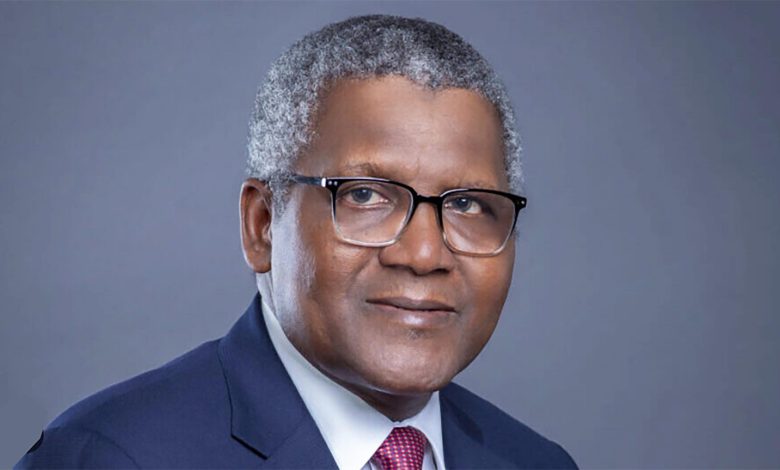
President of the Dangote Group, Aliko Dangote, said over the weekend that Nigerians would be able to purchase shares in the Dangote Petroleum Refinery within the next four to five months, as the conglomerate moves to open the $20 billion facility to broader public ownership.
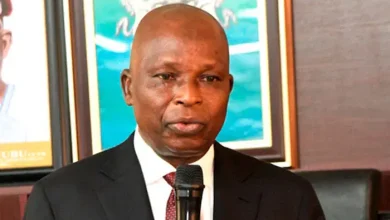
Dangote disclosed this while speaking with journalists at the Lagos refinery complex during a working visit by the Group Chief Executive Officer of the Nigerian National Petroleum Company Limited, Bayo Ojulari, accompanied by members of the NNPC board and executive management team.

“Individually, Nigerians, too, will have an opportunity. In the next maximum four or five months, they will actually be able to buy their shares,” he said, noting that investors could choose between local and foreign currency dividends given that the refinery earns in dollars.
Dangote also clarified the nature of NNPC’s existing stake in the facility, saying the national oil company holds 7.25 per cent of shares on behalf of the Nigerian people. He said the planned public offering would complement, rather than replace, that arrangement.

Beyond the shareholding announcement, Dangote outlined plans for deepened operational collaboration between his group and NNPC, describing the refinery not merely as a petroleum facility but as an industrial hub with broader implications for Nigeria’s downstream and petrochemical sectors.

Dangote also disclosed that the refinery complex would, within the next 30 months, commence production of linear alkylbenzene, a key raw material used in the manufacture of detergents at a scale sufficient to supply the entire African continent.

Meanwhile, Ojulari, in his remarks, said that the Dangote–NNPC Alliance will redefine Nigeria’s energy security and deepen industrialisation.
Ojulari said Nigerians should be grateful for the vision and leadership that made the 650,000 barrels per day refinery a reality, describing it as a bold demonstration of Nigeria’s industrial capability.
He described the refinery as a source of national pride and an example of Nigeria’s ability to leapfrog legacy industrial constraints through the adoption of best-in-class global technology.
Guardian news