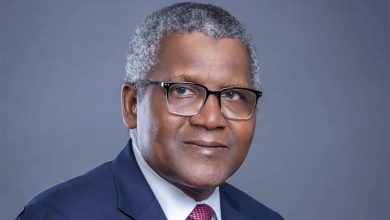


At moments of transition, societies often pause, not merely to choose successors, but to reflect on the qualities of stewardship required for the next chapter. In Ijebuland, where tradition prizes restraint, lineage, and character over self-promotion, such moments invite careful consideration rather than noise.
As discussions continue within the Fusengbuwa Ruling House following the end of a historic reign, attention has naturally turned to individuals whose life paths suggest long preparation for responsibility.

Among those being thoughtfully mentioned is Barr. Prince Oriola Adeyemi, of the Olufadi/Obanlefa branch of the Fusengbuwa Ruling House, a son of Ijebu whose journey has bridged ancestral grounding, global institutions, and consistent community engagement.
Prince Oriola’s story is notable not for public campaigning, but for the steady accumulation of experience in institutions where judgment, patience, and integrity are essential. His academic path alone reflects uncommon rigor.

Prince Olawale holds an Executive LL.M. in Securities and Financial Law from Georgetown University Law Center, and a Juris Doctor from Hofstra University School of Law, where he earned the New York State Bar Association Corporate Counsel Section’s Kenneth G. Standard Award. Earlier, he studied Economics, Finance, and English Literature at City University of New York (Lehman College) as a Starr Foundation Full Tuition Scholar-an interdisciplinary foundation that blends analysis with cultural awareness.

Professionally, Prince Oriola has served at the highest levels of global regulation and legal practice. He is currently a Senior Associate at Simpson Thacher & Bartlett LLP, advising leading financial institutions like JP Morgan, Blackstone and KKR.

His work involves governance, compliance, disclosures, board advisory, and regulatory strategy-core skills directly transferable to the leadership of a complex traditional institution interfacing with modern government and global partners. Before this, he was Counsel at Faegre Drinker Biddle & Reath LLP, where he advised fund boards, sponsors, and directors on governance, risk management, ESG (environmental, social, and governance) matters, and regulatory compliance.
Before this, he was Senior Counsel at the United States Securities and Exchange Commission (SEC) in Washington, D.C. At the SEC, he was not merely interpreting policy; he helped draft and shape major national rules, including Regulation Best Interest (Reg BI), Form CRS, fiduciary duty interpretations, custody reforms, ESG disclosure initiatives, and fund-naming regulations. His work earned multiple Chairman’s Awards, recognizing service to the public interest and excellence in rulemaking-distinctions that speak to trust, competence, and ethical leadership.
Unlike many aspirants whose leadership credentials are aspirational, Prince Oriola’s career is defined by writing the rules that govern institutions, advising boards at the highest level, and balancing tradition with innovation. His work at the SEC, FINRA, and leading law firms required integrity, patience, consensus-building, and respect for established frameworks-qualities deeply resonant with Ijebu kingship values.
Beyond law and regulation, Prince Oriola is a Partner at The Adomi Group (www.adomigroup.com), a multidisciplinary platform engaged in advisory, investment, and development initiatives across Africa and the diaspora. The group is currently in talks to develop a world class resort in Ijebu Epe similar to one that the group recently completed in Akosombo.
This work reflects a long-term orientation toward institution-building, economic development, and governance-concerns increasingly central to conversations about the future of Ijebuland.
Beyond his professional life, he has remained actively connected to Ijebuland as an active member of Obayori Akilé Ijebu Regberegbe, participating in age-grade service and collective responsibility, a cornerstone of Ijebu social organization. He supports family institutions, heritage preservation, mentoring youth, and consistently articulating a vision of kingship rooted in Ìwà, Ọgbọ́n, and Ìtẹ̀síwájú (character, wisdom, and progress).
In Ijebu tradition, kingship is not claimed through declaration; it emerges through lineage, readiness, and the judgment of elders. Seen in this light, Prince Oriola’s presence in current discussions appears less as ambition than as a claim shaped by time and preparation.
As Ijebuland looks ahead, the question is not only who may succeed, but what kind of stewardship the moment requires. Many observe that the future will demand leaders who can honour tradition while engaging confidently with modern institutions and a global Ijebu community.
In that sober reflection, Prince Oriola’s life offers an example of preparation without haste, service without spectacle, and readiness without noise-qualities that have long defined enduring leadership in Ijebuland.