By Femi Ogbonnikan
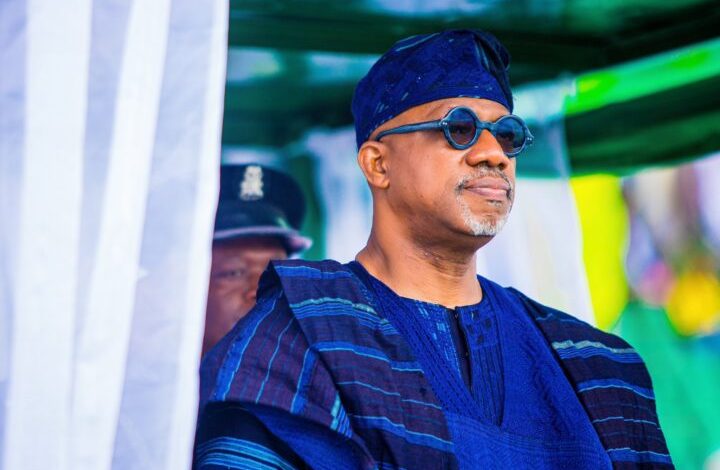
As campaigns for the general elections kick into full swing across Ogun State, Governor Dapo Abiodun has launched a series of strategic, high-level moves to reconcile aggrieved members of the All Progressives Congress (APC) to foster internal unity, restore trust, and entrench party cohesion.

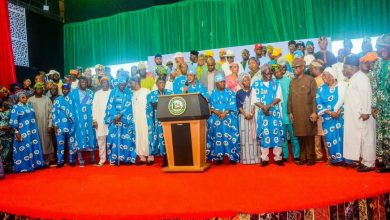
This critical political development, which signals a shift from competitive primaries to collaborative general election execution, follows the formal inauguration of the state campaign council, a broad-based organ established to initiate and coordinate grassroots mobilisation across all 22 Local Government Areas of the state.

In politics, shifting power dynamics, intense primary contests, and competing personal ambitions inevitably generate friction, resentment, and disagreement.
This is a universal reality, not peculiar to Ogun APC.
What distinguishes mature political organisations from fragile ones is not the absence of disagreement, but the institutional capacity for peaceful post-primary reconciliation.
The rule of the game, therefore, is not conflict, but settlement, inclusion, and forward movement.

With opposition parties actively attempting to leverage internal rifts through emotive campaigns, propaganda, and opportunistic alliances, entering this high-stakes election with a divided house is a vulnerability the ruling party cannot afford to tolerate.
The stakes are simply too high. Ogun State is Nigeria’s industrial capital, its second-largest economy, and a critical swing state in national politics.
A fractured APC in Ogun would not only jeopardise the party’s electoral fortunes but also risk reversing the economic gains of the last seven years. By launching the campaign council while simultaneously extending a firm olive branch to dissatisfied party members, the Governor is seeking to consolidate broad-based support for a decisive, resounding victory at the polls.

Speaking during a high-level parley with APC leaders, community elders, youth mobilisers, women leaders, and key political stakeholders in Ijebu-Ode Local Government Area, Governor Abiodun made it abundantly clear that genuine reconciliation must not be passive, cosmetic, or superficial. According to him, the era of token appeasement is over.
He ordered the immediate establishment of dedicated reconciliation committees at the ward, local government, and state levels to address grievances directly, document complaints, propose restitution where necessary, and commit to personal oversight and full execution of their final recommendations.

The Governor emphasised that these committees would not be constituted as mere political window-dressing. Their membership will draw from respected party elders, neutral mediators, and grassroots organisers who understand the peculiar dynamics of each locality. This ward-to-state architecture ensures that no grievance is too small to be heard and no stakeholder is too distant to be reached. Reintegrating members who lost out in recent primary elections is central to the party’s strategy, as bringing previously alienated factions back into the fold transforms divided voting centres into unified strongholds that the opposition cannot breach. In practical terms, it means ensuring that a ward chairman who felt sidelined in Abeokuta North feels as valued as a youth leader in Ijebu-Ode, and that a former aspirant in Ogun West sees a clear pathway to relevance and reward within the party structure.
Crucially, this drive for reconciliation is inextricably linked to the broader political chessboard of the 2027 elections, particularly Governor Abiodun’s own ambition to represent the people of Ogun East Senatorial District in the National Assembly.
The political context is important. Following his endorsement by critical stakeholders — including over 100 councillors across the nine local government areas of Ogun East, market women associations, youth coalitions, and senior party elders like former Deputy Governor Segun Adesegun — Abiodun secured the APC senatorial ticket in a definitive primary victory earlier this year, polling over 75,000 votes. The victory was not just numerical; it was symbolic, representing a vote of confidence from the grassroots of his home zone.
However, securing the ticket was only the first step. The ensuing political friction, notably with the incumbent Senator Gbenga Daniel and his loyalists, as well as other aspirants who felt short-changed by the primary process, underscored the urgency and sensitivity of the ongoing reconciliation efforts.
In a district as politically sophisticated as Ogun East, with its nine local governments and its proud history of producing national leaders, unity cannot be decreed; it must be negotiated and earned.
By actively reaching out to aggrieved factions and insisting on an all-inclusive political framework, Governor Abiodun is not merely acting as a statesman; he is strategically securing his own electoral base with political maturity. He recognises that to translate his gubernatorial successes into federal legislative influence, his home senatorial district must be completely united behind his candidacy.
The message from the Ijebu-Ode parley was clear and unambiguous: personal ambitions must align with party supremacy, and an undivided Ogun East is non-negotiable for his smooth transition to the Red Chamber. There can be no Red Chamber bid without a truly united home base.
While internal reconciliation provides the organisational foundation for political victory, the campaign council’s primary public narrative must be anchored on the administration’s historic economic achievements.
Elections are ultimately won not on sentiments, but on substance, and the Abiodun administration has substance in abundance.
Under Governor Abiodun’s stewardship, Ogun State has undergone an extraordinary macroeconomic transformation, expanding from a ₦3.5 trillion economy at the inception of his tenure in 2019 to a monumental ₦17 trillion Gross Domestic Product (GDP).
This nearly five-fold expansion, which solidifies Ogun State’s position as the second-largest economy in Nigeria and its undisputed premier industrial capital, is the direct outcome of targeted, visionary governance structured around the administration’s ISEYA developmental framework, spanning Infrastructure, Social Welfare, Education, Youth Empowerment, and Agriculture.
A ₦17 trillion economy is not an abstract statistic.
It reflects a thriving economic environment where Internally Generated Revenue surged from ₦52 billion in 2020 to nearly ₦200 billion annually, enabling the state government to finance transformative infrastructure projects without over-burdening its citizens with excessive taxes. It means more factories operating, more jobs created, more businesses formalised, and more prosperity circulating within local communities.
To deliver a sweeping electoral victory for all APC candidates — including President Bola Ahmed Tinubu, the party’s governorship candidate Senator Solomon Olamilekan Adeola (Yayi), his running mate Alhaja Kudirat Adegunwa-Balogun, and candidates across the Senate, House of Representatives, and State House of Assembly — the campaign council must relentlessly sell these verifiable performance indicators to the electorate. The strategy is not to engage in emotional mudslinging, but to present a data-driven scorecard.
The party’s campaign canvassers must emphasise the physical, day-to-day manifestations of this ₦17 trillion economy, which include over 1,500 kilometres of strategic road networks constructed or rehabilitated across all three senatorial districts. Key projects like the Ijebu-Ode-Epe toll road, which has opened up the entire Ogun East corridor to Lagos, the Sagamu-Abeokuta Expressway, the Denro-Ishasi-Akute road that has transformed border communities, and vital border-community access corridors connecting Ogun directly to Lagos commercial markets have drastically reduced travel times, lowered transportation costs, reduced post-harvest losses for farmers, and facilitated seamless intra-state commerce.
Furthermore, flagship legacy projects like the Gateway International Airport (GIA) at Iperu-Remo have successfully positioned Ogun State as an aviation, logistics, and agricultural export hub for the entire West African sub-region.
By driving industrialisation around the aerotropolis, creating thousands of direct and indirect job opportunities for youths, artisans, and professionals, and attracting multi-billion-dollar foreign direct investments from companies seeking proximity to an international cargo hub, the airport stands as a testament to strategic, long-term economic planning rather than short-term political projects.
Comprehensive ease-of-doing-business reforms, including digitised land administration, streamlined business registration processes, and investor aftercare services, have established Ogun as Nigeria’s most attractive destination for manufacturing and agro-processing conglomerates.
This has converted industrial growth into real economic opportunities, wealth creation, and improved living standards for households across the state’s twenty-two local government areas.
In addition to industrial infrastructure, the campaign council must highlight the administration’s human capital investments, particularly in the social welfare, healthcare, and education sectors.
The continuous renovation of primary healthcare centres across all 236 political wards, ensuring at least one functional PHC per ward, the construction of affordable housing estates in Abeokuta, Sagamu, Ijebu-Ode, Kobape, and Ilaro, as well as state-wide agricultural empowerment programmes providing land, inputs, and credit facilities to over 10,000 smallholder farmers, have directly bolstered rural economies and enhanced food security across the state.
It is precisely this track record of infrastructural and economic development that forms the strongest justification for Governor Abiodun’s elevation to the Senate.
The argument for his senatorial ambition is not rooted in a mere desire for political continuity or personal aggrandisement, but in the critical need to attract federal support for the foundations he has already built at the sub-national level. As a Senator representing Ogun East, Abiodun would be uniquely positioned to push for federal legislative frameworks that support state-level industrialisation, secure federal funding for the complete operationalisation and concessioning of the Gateway Agro-Cargo Airport, and champion policies that enhance ease-of-doing-business at the national level.
His wealth of executive experience, having successfully managed and exponentially grown the complexities of Nigeria’s industrial capital for seven years, equips him with the requisite gravitas, technical understanding, and national network to influence national economic policy from the Red Chamber.
The councillors and stakeholders who endorsed him correctly argued that a leader who could engineer a ₦17 trillion economy at the sub-national level is exactly the kind of technocratic mind required at the National Assembly to help shape federal laws that drive national economic recovery, fiscal federalism, and industrial decentralisation. Consequently, electing him to the Senate is not a reward, but a strategic deployment of tested capacity to secure better federal dividends for the people of Ogun East and Ogun State at large.
Speaking in his capacity as Chairman of the Campaign Council, Governor Abiodun cautioned against political complacency, reminding party leaders, ward executives, and field operatives that modern elections are no longer decided by past reputations or the sheer crowd size at political rallies. Nostalgia does not win elections. Victory demands scientific, deliberate, and intentional preparation, meticulous organisation, data-driven voter contact, polling-unit vigilance, and continuous, empathetic engagement with the electorate.
The directive issued to the newly inaugurated council is unambiguous: every candidate, local leader, ward executive, and grassroots canvasser must take this tangible record of economic growth, developmental service, and the clear vision for federal representation directly to the doorstep of every voter in every ward.
Ultimately, Governor Dapo Abiodun’s proactive reconciliation drive, coupled with an unmatched ₦17 trillion economic scorecard and a compelling case for federal legislative representation, provides the Ogun State APC with an unbeatable electoral narrative. By healing internal political wounds, prioritising inclusive party governance, and resolving primary fallouts with sincerity, the party has successfully insulated its grassroots structures against opposition incursions. This newly forged internal cohesion ensures that the APC approaches the upcoming general elections not as a fragmented coalition of competing interests, but as a unified, formidable, and disciplined political force across all the 22 local government areas.