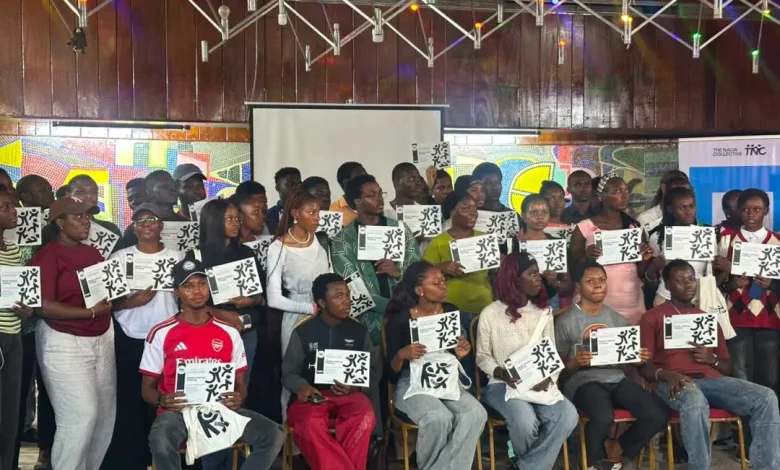
No fewer than 50 youths in Lagos State have been trained to identify fake news, impostor content, misleading headlines, manipulated or altered media, fabricated information and content presented out of context.
The training comes against the backdrop of growing concerns over the spread of misleading information online. Around 75 per cent of internet users in Nigeria frequently encounter fake news on digital platforms, severely affecting public trust in online media.

Studies such as the Abuja Public Trust Study indicate that three out of four respondents regularly encounter misleading information.

Therefore, the Naija Collective organised a three-day media literacy workshop aimed at equipping young people with the skills to critically assess information and identify misinformation, disinformation and fake news.

The workshop featured sessions on the media landscape, critical reading, information verification and the responsible consumption of media content.

The final session focused on fact-checking and was facilitated by media communications strategist and trainer, Abdulkerimu Oare, who took participants through practical steps and tools for verifying information.

Oare introduced the CRAAP framework — Currency, Relevance, Authority, Accuracy and Purpose — as a tool for evaluating the credibility of information.
He explained that fact-checkers should consider how recent information is, whether it is relevant to the issue being discussed, the authority or credibility of its source, the accuracy of the claims and the purpose behind the content.
Participants subsequently engaged in a practical exercise designed to test their understanding of the lessons. They were divided into five groups and tasked with debriefing and analysing a news item, examining its claims and identifying possible red flags.
Oare said: “Over the past two days, we’ve covered issues around the media landscape, teaching young people how to read critically and investigate the content that’s in front of them. However, today, day three, was all about fact-checking.
“We tried to also explore all the typical shortcomings that they can identify from information that’s presented to be legitimate when it’s not.
“The participants showed great interest and they also displayed that the knowledge gained wasn’t lost, as they all actively participated in the exercises and scenarios before them,” he said.
One of the coordinators, Nosike Nwigene, said the organisers hoped the workshop would be the first of several editions.
Nwigene said the programme was particularly timely ahead of the coming elections, when young people could be exposed to large volumes of misleading or deceptive information.
Daily Post